
What Constant Screen Exposure Is Doing to Your Nervous System
Modern screens overstimulate the brain, quietly trapping our nervous system in constant fight-or-flight mode.
I remember those days when I felt extremely excited just to use technologies like computers or smartphones for the first time.
Those childhood moments when technology felt like a miracle. Something magical. Something to be enjoyed occasionally rather than constantly.
Back then, interacting with a screen was an event.
Now, 10–15 years later, screens have quietly attached themselves to us almost all the time.
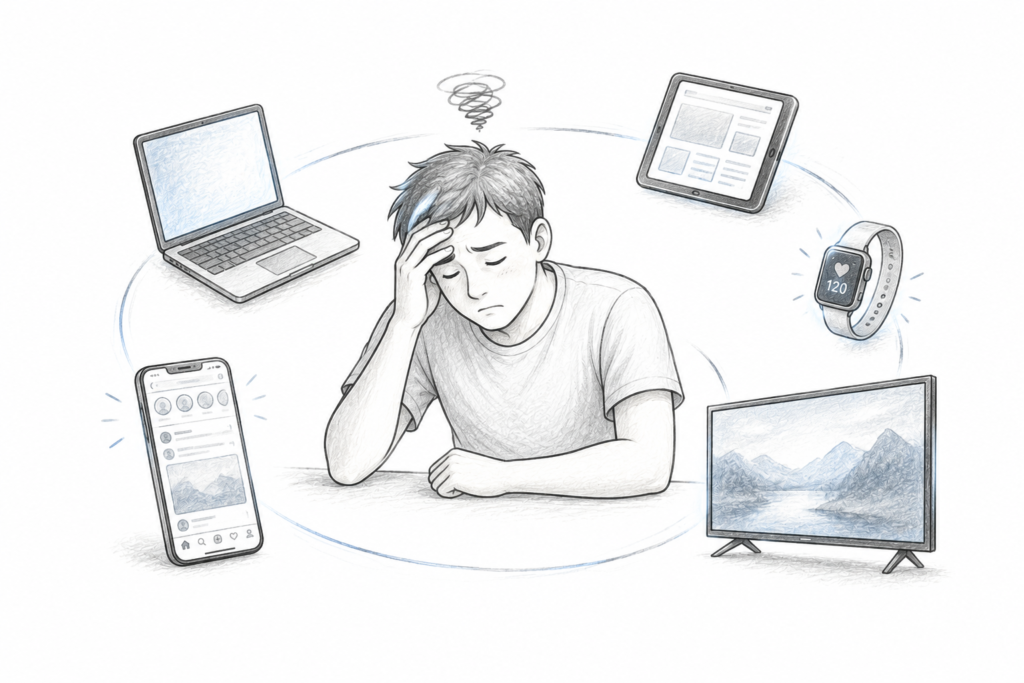
Our smartphones travel with us everywhere. Televisions, laptops, and tablets fill our homes and workspaces. Nearly everything we do is mediated through a glowing rectangle.
Knowingly or unknowingly, we find ourselves sitting in front of a screen, exchanging information.
Again and again.
Using screens for a short period of time is completely fine. Even two or three hours is not necessarily harmful.
But spending ten to twelve hours every day in front of screens, constantly consuming information and content, begins to feel abnormal for a healthy human nervous system.
The modern screen environment is extremely stimulating. Ultra-HD pixels, hyper-visualized colors, and rapidly changing images that shift every second with our swipes keep the brain constantly engaged.
Our nervous system was never designed for this level of continuous stimulation.
When the brain receives this much visual input, the nervous system stays hyper-activated. Instead of resting in a calm parasympathetic state, it remains trapped in sympathetic mode, the biological state associated with fight-or-flight responses.
Over time, this becomes one of the hidden causes of stress and anxiety in the modern world.
Sometimes the anxiety we feel suddenly appearing during the day is simply our nervous system signaling that something in our lifestyle is out of balance.
The body always speaks.
We simply forget to listen.
As this overstimulation continues, another problem quietly appears.
Sleep degradation.
Our nervous system struggles to slow down at night because it has been constantly stimulated throughout the day. Ironically, when we cannot fall asleep, many of us instinctively reach for our phones.
Which only makes the situation worse.
More screen exposure. More nervous system irritation. More disruption to natural rhythms.
Fortunately, the solution is surprisingly simple.
Use screens mindfully and intentionally, rather than through mindless consumption.
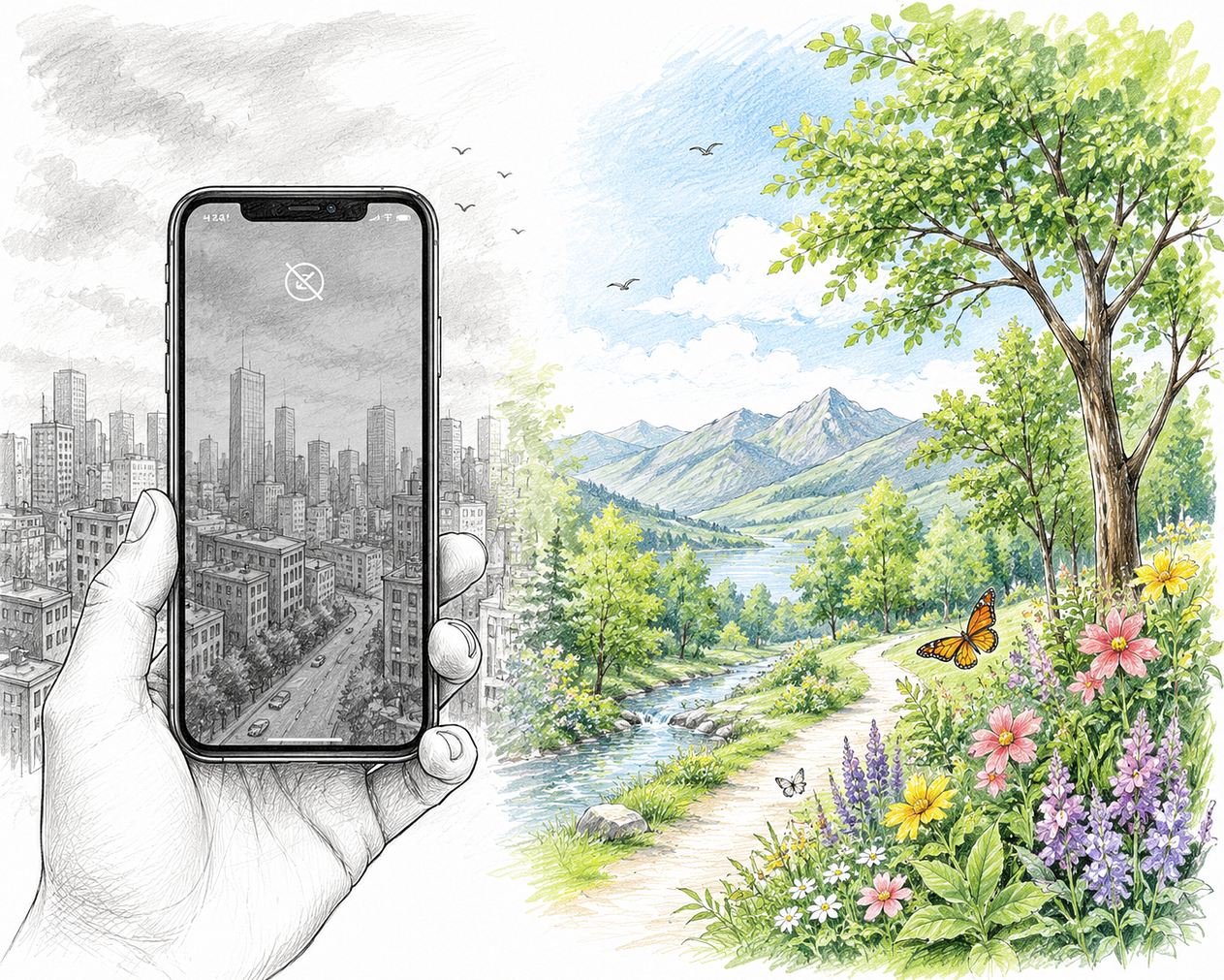
Small adjustments can make a significant difference. Many devices now include options like Zen Mode, Monk Mode, or Greyscale Display, which remove the highly stimulating colors that keep the brain hooked.
When the screen becomes less visually addictive, you naturally use it with more intention.
If screens are used for entertainment, they can be enjoyed consciously with clear limits, perhaps thirty minutes or an hour rather than endless scrolling.
But the most powerful reset is much simpler.
Step away from the screen. Go outside. Return to nature.
Something fascinating happens when you switch your devices to greyscale or minimalist modes. You suddenly realize how artificial the hyper-colored digital environment really is.
And when you look up from the screen, the real world begins to feel brighter, richer, and more alive again.
The sky feels deeper. The trees feel greener.
Reality returns.
Technology was meant to be a tool that supports life, not something that quietly replaces it. So use screens wisely.
But do not let them slowly steal your nervous system, your attention, and ultimately your life.